

Your AI Hiring Co-Pilot
Meet the AI recruitment platform that helps you fill 1 or 10,000 roles with the same precision, speed, and efficiency.
Everything You Need to Hire Better — in One Intelligent Platform
From job posting to final selection, Eximius makes hiring easier and faster. It replaces manual work with smart automation — helping you focus on people, not repetitive tasks.
Step 1
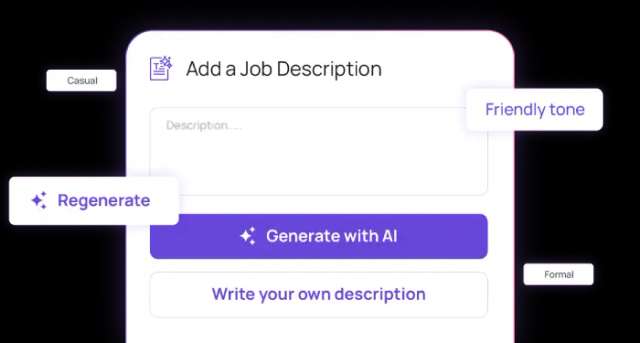
AI-enabled Job Posting
Define hiring requirements just as you received from your hiring manager. Our intelligent, patent-pending AI takes care of the rest.
Step 2
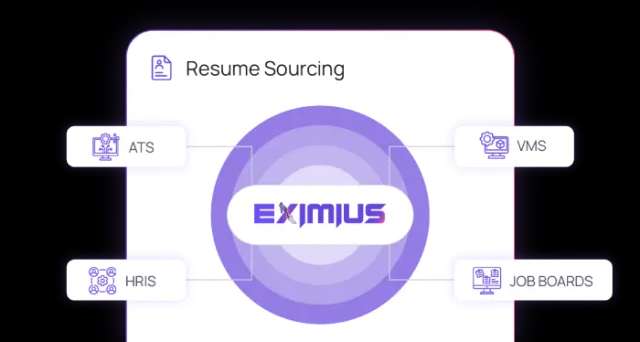
Multi-Channel Application Processing
Process all your applications from career websites or job boards—whether for one job or a hundred—through the Eximius AI engine for effortless organization.
Step 3
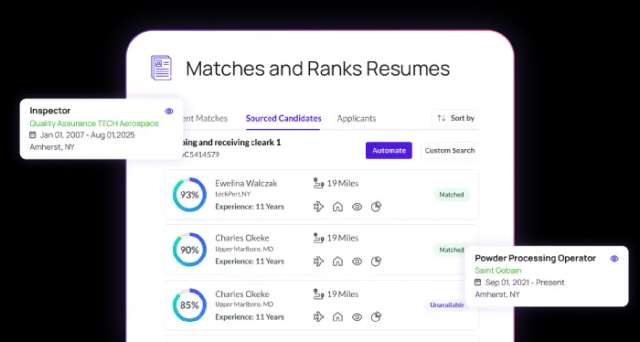
Match and Rank Resumes in Seconds
Reads resumes like a seasoned recruiter—extracting skills, interpreting experience, and mapping candidates to open roles with pinpoint precision.
Step 4
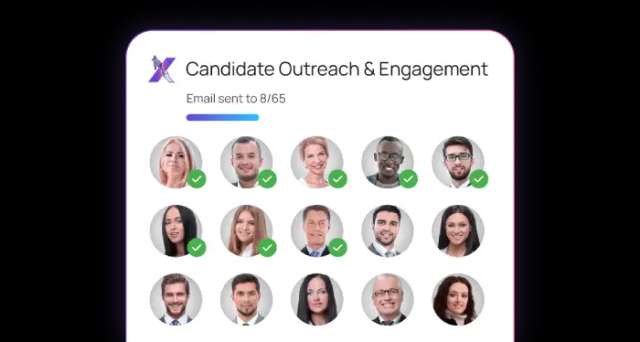
Connect and Engage with Candidates
Personalized outreach tailored to each candidate's background, interests, and fit. Ensure every applicant—qualified or not—gets a professional response.
Step 5
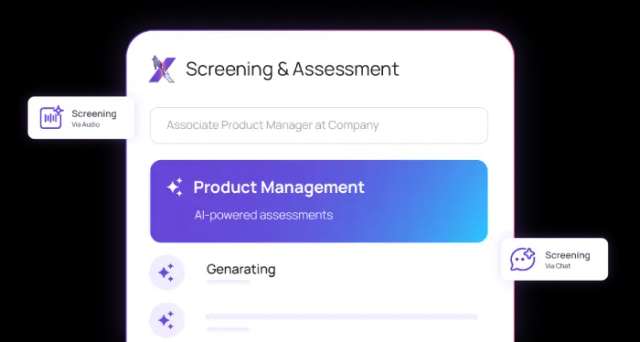
Initial Screening and Technical Assessments
Intelligent, industry and role-specific assessments via Voice and Chat. Dynamic scoring and contextual insights to evaluate candidates beyond resumes.
Step 6
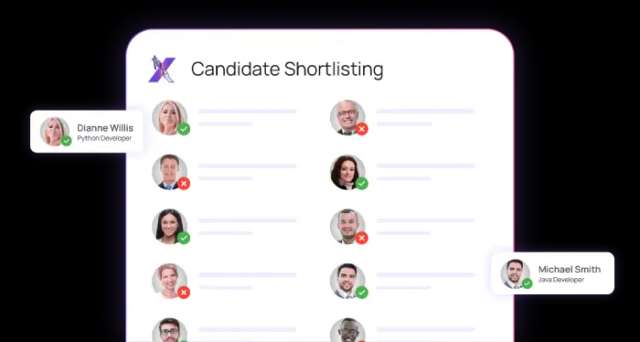
Get an Interview-Ready Shortlist
Get an AI-generated scorecard and summary— see who’s qualified, who’s close, and who’s not a fit. Invite top candidates for interviews directly from the dashboard.
One Platform. For Every Recruiter.
Eximius is built for every kind of recruiter. Whether you work solo or as part of a team, it adapts to how you hire — making it a flexible talent acquisition platform that scales with your needs.
For Independent Recruiters
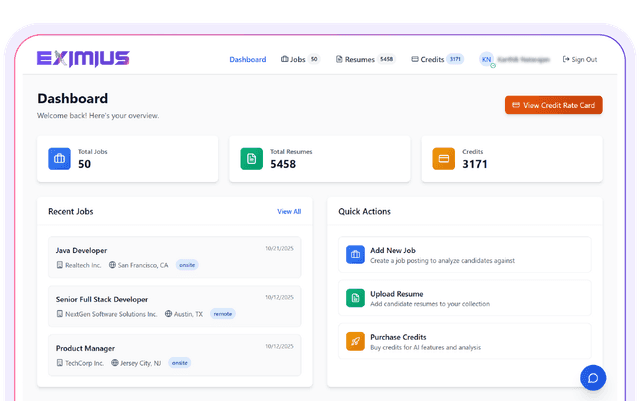
Activate your talent pool
Post jobs, upload resumes, and let Eximius match, engage, and shortlist the right candidates for each open job. As a self-serve job recruitment platform, it gives solo recruiters the structure and speed they need without the complexity of large systems.
Pay-as-you-go credits that never expire
Buy only what you need - no subscriptions or commitments. Use these credits at your pace and on your terms.
Use Promo Code: STARTER500
For Businesses
Smart automation
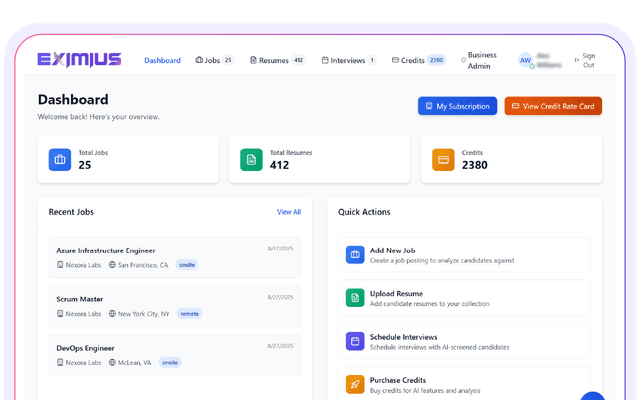
From finding the right candidates to communicating with them, let our AI recruitment platform handle the busywork so your team can focus on hiring faster.
Built for collaboration
Manage shared pipelines, track team performance, and streamline every recruiter’s workflow in one place.
Use Promo Code: STARTER500
The Eximius Advantage
Eximius combines scale, speed, efficiency, and precision to transform how teams hire.
From posting to shortlisting, every step is automated, accurate, and effortlessly scalable — redefining recruitment for businesses of every size. As an advanced AI-based recruitment platform, it improves accuracy, reduces manual effort, and keeps hiring consistent across roles and regions.
AI-Powered
Precision
AI ensures only the right talent reaches you — fair, accurate, and bias-free results for every role, every time.
Lightning
Speed
From posting to shortlisting, Eximius accelerates every step — delivering qualified candidates in minutes, not hours or days.
Limitless
Scalability
Handle any hiring volume effortlessly — maintaining consistency, accuracy, and performance across every recruiter and role.
Process-Driven
Efficiency
Eximius automates manual steps, unifies workflows, and saves recruiter hours — enabling smarter, faster, and more human-focused hiring.
To find the best talent, you need the best hiring platform
Eximius blends human insight with explainable AI to help HR and TA teams go beyond qualifications—unlocking passion, potential, and performance in every hire. As a next-generation hiring platform, Eximius enables faster, fairer, and more consistent decisions. Built for enterprises of every size, it helps talent leaders turn traditional recruitment into a strategic advantage while serving as a complete hiring solution for growing teams.
Reduction in Sourcing Time
0
%
Less Screening Effort
0
%
Faster Time-to-Hire
0
%
Lower Recruitment Costs
0
%
Better Candidate Quality
0
x
Use Promo Code: STARTER500
AI Co-Pilot Built for Your Biggest Hiring Challenges
Whether you’re hiring for thousands, dozens, or just one, Eximius makes every shortlist smarter. Our AI-based recruitment platform helps you identify the right talent faster, reduce hiring costs, and improve candidate quality.
Poorly written job descriptions
Clear, AI-written job descriptions
Wasted sourcing effort
Instant application processing from career websites or job boards
Slow candidate engagement
Automated, real-time outreach
Inconsistent screening
Conversational AI bots for 100% screening coverage
Rising hiring costs
Automation-first workflows reduce spend by 40%
Insights
From AI innovations in recruitment to strategies for scaling talent acquisition, our insights are designed to help you hire faster, better, and smarter.


Still have questions? Get the answers you need.
This FAQ section covers the most common questions about Eximius. From integrations and compliance to faster shortlists, bias-aware screening, and flexible pricing, you’ll find everything you need here. For enterprises, growing teams, or independent recruiters alike, these FAQs explain how Eximius serves as an end-to-end hiring solution that makes hiring faster, fairer, and more effective.
Who can use Eximius?
Eximius is built for anyone involved in recruitment — from independent recruiters to large talent acquisition teams. Whether you’re a solo recruiter, a staffing agency, or part of an enterprise HR team, Eximius adapts to your needs and works seamlessly as a flexible talent acquisition platform.
- Eximius for Individual Recruiters helps solo recruiters and consultants simplify every step of hiring — from sourcing and screening to communication and placements — all from one intelligent workspace.
- Eximius for Businesses empowers staffing firms and enterprise hiring teams to streamline collaboration, manage high-volume recruitment, and drive faster, data-backed hiring decisions with AI-powered precision.
Does Eximius integrate with my ATS?
Yes, absolutely. Eximius is designed to work alongside your existing ATS and HR tech stack, not replace it.
With built-in integrations and API-based connectivity, Eximius connects with leading ATS platforms, CRMs, job boards, and collaboration tools — ensuring data flows seamlessly between systems.
For enterprises, Eximius supports custom integrations with internal databases, ERPs, and HRMS platforms, providing a unified job recruitment platform without disrupting your existing ecosystem.
Whether you use Greenhouse, Lever, Bullhorn, or a custom-built ATS, Eximius keeps everything in sync — so your recruiters can focus on hiring, not switching between tools.
How does Eximius improve candidate engagement compared to traditional hiring platforms?
Eximius transforms candidate engagement by making every interaction personal, data-driven, and insight-driven — not just automated.
Traditional talent acquisition platforms rely on generic messages and static workflows. Eximius changes that by helping recruiters create more targeted, personalized, and relevant outreach using AI insights. It reviews candidate profiles, skills, and career signals to recommend personalized messages that connect with each individual.
As a modern AI-based recruitment platform, it improves accuracy and empathy in communication, enabling recruiters to make stronger connections, achieve higher response rates, and offer a more human hiring experience.
For larger enterprise HR or TA teams, Eximius For Business makes sure this personalization scales across recruiters, roles, and regions — keeping brand and engagement quality consistent, no matter the size of the operation.
The result? More meaningful conversations, greater candidate trust, and a hiring experience that feels genuinely human.
How does Eximius ensure bias-free recruitment?
Eximius is built to make hiring smarter, fairer, and more data-driven — helping teams reduce unconscious bias across the recruitment process.
Eximius uses Ethical AI to evaluate skills, cultural fit, and potential. It focuses on skills, experience, and role fit — not personal identifiers. Candidate profiles are assessed using objective data points such as qualifications, career history, and competencies, ensuring every recommendation is based on merit.
For businesses, Eximius for Business provides transparent analytics, helping monitor DEI metrics and strengthen equity, making it a reliable hiring solution for both compliance and decision-making.
The result? A hiring process that’s efficient, equitable, and ethical.
Is Eximius suitable for high-volume hiring as well as niche roles?
Yes — Eximius is built to support every type of hiring need with accuracy and speed.
For high-volume hiring, Eximius automates tasks like sourcing, shortlisting, and outreach — helping recruiters handle thousands of applications efficiently while maintaining quality. Its AI engine quickly identifies best-fit candidates, significantly reducing time-to-hire.
For niche or specialized roles, Eximius dives deeper. It evaluates candidate skills, experience details, and job context to find talent that truly matches your needs — not just keywords.
Whether scaling global teams or filling critical roles, Eximius adapts intelligently — functioning as both a scalable and preceision-driven job recruitment platform.
What makes Eximius different from other AI hiring tools?
Eximius stands out by combining automation, intelligence, and structured workflows into one unified system. Unlike tools that focus only on sourcing or screening, Eximius supports the entire hiring lifecycle — from job creation to final selection. As a comprehensive hiring solution, it delivers explainable AI insights, consistent evaluations, and real-time collaboration for teams of any size. This ensures faster shortlists, better accuracy, and a seamless experience across every stage of recruitment.
Ready to Transform Your Hiring Process?
Join thousands of professionals already using AI to hire better, faster, and smarter. Start your transformation today.
Use Promo Code: STARTER500
Want a custom built, white labeled Eximius that connects with your existing tech-stack using advanced integrations and custom workflows? Talk to our Experts today.